Outdoor Network has launched its latest state-of-the art digital rotating billboard in Durban, and will be rolling out this innovative platform to numerous other sites around the country in the months to come. Ideal for advertisers seeking national coverage, the new digital billboard from Outdoor Network provides brands and advertisers with an exciting new offering designed specifically for impactful creative, which assists in positively influencing brand image while driving improved recall and engagement. The unique design ensures that the billboard is optimised to traffic flow in order to achieve increased impacts and visibility. Its ability to rotate ensures visibility of advertising messaging to motorists and commuters during both morning and afternoon peak hour traffic patterns. According to PQ Media, Digital Out-of-Home (DOOH) is currently the fastest growing segment within the Out-of-Home industry, fuelling overall OOH media growth worldwide in 2016. The segment increased an estimated 12.6% to almost $12 billion globally for the full year, the strongest growth since 2011. Digital commanded just over 24% of the total global revenues in OOH in 2016, and within that, Digital Billboards and signs are estimated to have grown at over 13% year-on-year in 2016 to over $3.7 billion globally. Advertisers now have the ability to capitalise on this growth trend through Outdoor Network’s latest product rollout. Outdoor Network’s first roadside digital billboard is strategically positioned on Sandile Thusi Road (Argyle Road) in Durban with exposure to over 90,000 consumers per week and over 1,6 million views per month. The billboard will deliver on reach and frequency on a premium digital format for brands looking to communicate with highly sought after consumers within the LSM 7-10 segment. This key high traffic location delivers a large volume of aspiring and affluent consumers daily as they go about their commute to and from work, school and shopping. The billboard offers advertisers the ability to expose brand messaging to consumers with true dayparting via campaigns tailored specifically to the needs of brands. Now advertisers can engage target audiences when affinity for specific brands, services and products are heightened. For example: breakfast products in the morning, fast-food outlets around lunch and alcohol brands later in the evening. The features and unique innovative design of the 3×6 rotating digital billboard are not restricted to simply exposing advertising, but rather doing so via a highly captivating, modern and premium platform. Says Patrick de Robillard, Outdoor Network’s Head of Sales Billboards: “We are extremely excited about the launch of our innovative LED billboard. The platform will form the core focus area for the business over the next two years or so, ensuring we provide advertisers with world class advertising opportunities. The benefits and attributes of the new product will further ensure that Outdoor Network will be able to better service current and future clients’ requirements.” Outdoor Network’s broader strategy is to provide brands and advertisers with a highly desirable national footprint in key, high demand metropolitan areas such as Cape Town, Johannesburg, Tshwane, eThekwini, Polokwane and Mbombela to name a few. Digital plays a key role in this strategic growth plan and the company intends to invest substantially in its digital inventory, both roadside and highway based, in the coming years. This growth is beneficial to large media agencies and multinational brand advertisers looking for signature locations and national coverage as Outdoor Network will be better equipped to service their requirements effectively. DOOH is ideal for advertisers looking to raise mass awareness and generate incremental reach within a unique environment since it intercepts active consumers with highly targeted messages as they move through their day. Delivering effectively on impact, engagement and recall, digital Out-of-Home campaigns combine lifestyle interest with location targeting to capture the attention of consumers when they are in an acquisitive state of mind. A recent study by Canadian Digital Network Ltd (CDN) found that 62% of motorists noted that they were exposed to an OOH campaign prior to their biggest purchase of the day, and that 78% of all consumers view DOOH as ‘attention grabbing’. Considering that the study also found that 35% of consumers make last minute purchase decisions, the benefits of advertising on DOOH become ever more valid. DOOH is strategically located, vibrant, compelling, flexible and is more engaging than static since eyes tend to focus on moving, colourful and changing displays. With the ability to offer tailored and timely campaigns, brands are better placed to engage existing target markets, whilst at the same time attracting new business. Advertising on DOOH cannot be blocked, skipped or switched off, and since consumers are more likely to notice DOOH, campaigns are more memorable and therefore more likely to positively deliver on advertiser requirements. “Local Municipalities welcome digital signage structures since they reduce clutter and are aesthetically pleasing. Digital is growing globally, and as our network grows, mirroring global trends, we’ll be adding value to both advertisers and municipalities alike,” concludes Dumisani Malembe, Development Director for Outdoor Network. To find out how Outdoor Network’s roadside LED can help your brand deliver flexible, immediate and effective out-of-home campaigns nationally, contact info@on.co.za. Follow Outdoor Network on Twitter @outdoornetsa, Facebook @OutdoorNetworkSA, on LinkedIn or visit www.on.co.za
Path to purchase…OOH or POS?
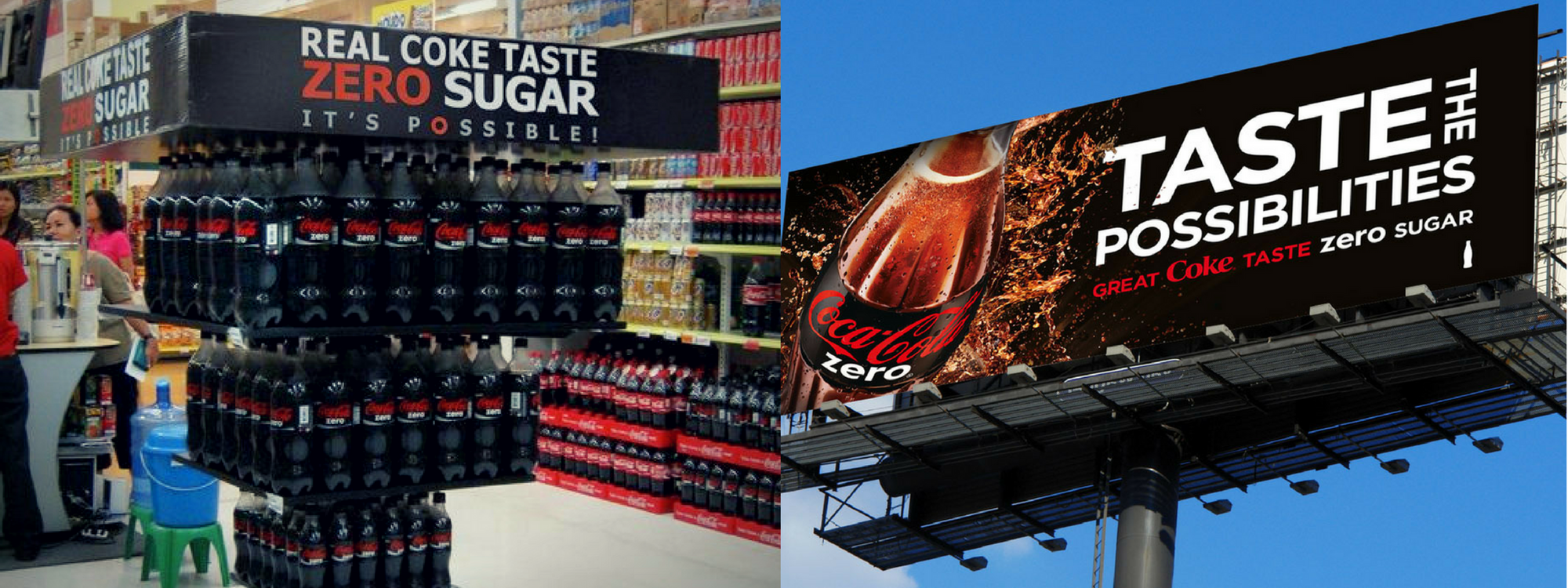
Competition among retail brands has never been as fierce as it is now, and marketers face the challenge of winning the attention and spend of easily distracted consumers. But out-of-home is a winning strategy, comparable to point-of-sale when it comes to achieving return on investment, argues Howard Lonstein, Marketing Manager for Outdoor Network. We all know how effective point-of-sale (POS) is – it grabs the attention of consumers in the moment and lures them to the shelf. But think about it: out-of-home (OOH) shares at least some of the features, functions and creative strategies of POS. Ads on billboards and street furniture are just as unmissable as in-store displays and they employ similar design strategies, direct consumers to products and services they need, and can’t be blocked. It’s time that brands and media buyers realise that OOH is an equally powerful tool when it comes to influencing a consumer’s purchasing decisions. If POS increases purchasing intent, so does OOH – the United Kingdom’s Outdoor Media Centre (OMC) says OOH is the ‘last window of influence’ on consumers who leave their homes or workplaces to shop – 83% of people recall seeing OOH advertising within the last 30 minutes before shopping and 72% said they would be influenced to purchase a product. Only 17% of shoppers said they would stick to a shopping list. A five-year study conducted by Posterscope and Dentsu Aegis Network shows that campaigns that include OOH boost purchasing intent by 13%. Compared to other media like newspapers, radio, TV and websites, OOH is a leading driver of interpersonal relations (including metrics such as trust, relevance, customer service, expertise, convenience and caring), which indicates that its high-impact effect communicates brand messages in a positive way. Similarly, a survey conducted by the Outdoor Advertising Association of America (OAAA) shows that out-of-home advertising intercepts consumers near the point of sale better than any other advertising media – and it also reaches consumers with cellphones. According to the survey, within half an hour of being exposed to OOH advertising, consumers searched for brands online and on social media 22% of the time. OOH’s reach and interactive capabilities can teach consumers more about brands as they move from point A (which could be the home or office) to point B (which could well be a retail store). What all this proves is that the customer journey begins as soon as they leave home or the office, giving OOH advertisers ample opportunity to influence. The advertising strategies behind POS and OOH are very similar – with both, your aim is to grab attention, deliver a punchy message and mould purchase decision-making in a short space of time. OOH is good at wining over audiences ‘on the go’ and making a strong first impression within the window period of 3-5 seconds before the consumer’s mind wanders. It is fairly easy for marketers to achieve this. As with POS, brand and message should be instantly recognisable from a primary graphic or photograph. In more rural areas, imagery plays a key role, while consumers in urban areas are looking for innovation and original, inventive messaging. Although placement, location and timing are critical, it is great creative that makes the difference in terms of effectiveness – one should not be confined by the limits of a frame and explore extensions and 3D effects. When it comes to copy, it is always best to focus on one key message that is short and to the point. It is important to mention the company’s name, logo or brand, and image of the product or the service offering, and contact details (just one will do, since the on-the-move target market won’t take everything in). Finally, it is vital to be clear about a call to action, if there is one. When it comes to design elements, it is best to use a typeface that is legible at variable distances and bold, non-serif fonts (decorative, italic or thin serif fonts should be avoided because they disappear when viewed at a distance). Some colour combinations are easier to see or read than others, although not all contrasting colours are easy to read. Designs should use colours with high contrast in both hue (like red, green, yellow) and value (lightness or darkness). The greater the contrast between colours, the greater the impact achieved. Some of the most effective OOH designs use only two basic colours. The same principles apply to digital out-of-home (DOOH), but one should avoid using white backgrounds and change the message or design regularly – one can use multiple designs to tell the story of a brand. In short, OOH shares many features with POS – copy that is short yet effective; impactful images that complement the brand and drive action; and ongoing exposure to consumers ‘on the move’. There’s strong evidence to support the contention that OOH spend translates readily into sales – its appeal certainly increases the reach and recall of a campaign and, like POS, products and services advertised remain top of mind. OOH is therefore perfect for retail brands and the winning strategies employed by POS can be used equally effectively in OOH format. This is something marketers can leverage to drive sales and increase ROI – an elusive metric, but the ‘Holy Grail’ for advertisers.
SANBS selects billboards to drive blood donations
The South African National Blood Service recently selected a key Outdoor Network location in the vibrant and cosmopolitan CBD of Johannesburg for its latest campaign. The ‘It’s not just blood. It’s saving a nation’ campaign made use of one of the many benefits offered by billboards – that of the large format. Strategically positioned and illuminated, the highly visible billboard ensured that passers-by and motorists were exposed to the campaign message 24 hours-a-day within the bustling city centre. The South African map, represented by blood in the drip, reinforced the key campaign message and call to action with striking, and emotive accuracy. There is an ongoing need for blood donations in South Africa, with blood stocks at the SANBS regularly only sufficient for a few days. As a critical medical component in saving the lives of thousands of South Africans daily, high visibility and impact of this need is required in order ensure that the broader public is driven to take action. Says Howard Lonstein, Marketing Manager at Outdoor Network. “Following other successful Out-of-Home campaigns in conjunction with Outdoor Network, the SANBS again approached us with a view to highlighting the continued need for the service they offer and the important role much needed blood plays in saving lives.” “Billboards are an ideal platform for brands wanting to deliver impactful calls to action due not only to their size, but also their ability to drive recall and the frequency of reach. One of the many benefits of Out-of-Home – and billboards in particular – is the ability to strategically target a geographic area or demographic, which is precisely what the SANBS did in this campaign,” concludes Lonstein.
Remax geo-fences its advertising campaign
Remax, the global real estate company with a national footprint in South Africa firmly believes in Bus Shelter advertising to be of great benefit to the brand. This is evident from the long standing business relationship between Remax and Street Network. Street Network’s solutions and locations – which for individual branches is a key consideration – are seen as an ideal platform with which to raise brand awareness. Advertising on this platform provides repeat visibility in the key neighbourhood areas serviced by the agents. Among others, it is this repeat visibility which delivers effectively on Remax’s aim of being viewed as the leading and prominent real estate agent within those areas serviced. The Remax campaign delivered on a two pronged strategic objective for the brand. Corporate brand awareness in close proximity to local suburban offices, and geo-fencing in areas in which Remax have solid community presence.
Billboards drive Uber home
A recent Uber campaign to ‘drive’ downloads of its app was visible in the vicinity of entertainment hotspots in Johannesburg and Pretoria. There is a higher demand for its services which provides a much needed alternative to getting home safely, particularly after a ‘big night out’. The ride hailing app encourages consumers to ‘ride’ rather than drive, while also highlighting the low cost of the service between central recreation destinations within the cities. Uber selected strategically positioned billboards visible to the thousands of consumers who could benefit from making use of the services offered by utilising the app. The creative execution reflects relaxed and happy consumers which provided for heightened brand affinity with the consumer segment exposed to the messaging on the billboards. The international trend of online and technology brands making use of Out-of-Home advertising is well documented. Within the South African context, this is not much different. Billboards cannot be skipped, switched off or blocked, and brands such as Uber are making effective use of the ability of the platform to drive brand awareness.
Nando’s selects Street Network Bus Shelters for its Back to Work Campaign.
Nando’s, well known for its creative and often hard hitting advertising campaigns, recently selected Street Network’s Bus Shelters in and around Johannesburg for its back to work campaign. As part of a broader Out-of-Home media mix for the well know chain, The Nando’s bus shelters campaign ran for a six-week period over February and March 2017. Targeting consumers by suggesting that they ‘take their taste buds back on holiday’, the bus shelters were strategically selected for their close proximity to the brand’s restaurants within suburban environments. The highly visual creative promoted the brand’s new Mozambican Paprika basting, enticing consumers to experience the value for money meals, while for a moment, imagining they were back on holiday. “Bus Shelters are ideal platforms for food outlets such as Nando’s. Since bus shelter positioning is often close to shopping areas, they are perfectly placed to drive engagement and convert a call to action into purchase intent,” says Howard Lonstein, Marketing Manager at Outdoor Network. The relatively low cost of Bus Shelter advertising, in comparison to other media means that the medium provides an ideal marketing platform for not only large franchised food operations, but for single stand-alone restaurants also, particularly those within suburban environments. Bus shelters provide brand awareness, call to action as well as directional marketing and in terms of media spend and return on investment, work extremely well in promoting businesses within a specific area.
Street Network paints the town ‘yellow’ with Rawson
Rawson Property Group, South Africa’s 4th largest real estate brand, claims to have 1,000 neighbourhood experts across the country. This means that when you are looking to buy property, you are virtually assured of the fact that there’s a Rawson Neighbourhood Expert near you. It also means that there is one near or in the suburb or area you have your eye on as your next place of abode. Realtors know all about position, and when the Rawson Sandton branch aimed to ensure continuous awareness for the Rawson brand, and more specifically the Sandton branch, they turned to an advertising medium that supported their requirement: Bus Shelters. The branch – which services clients looking for an ideal place to call home in the Sandton and Morningside areas – selected strategically positioned Bus Shelters in order to drive general awareness of the brand amongst consumers within the community making use of roads in and around the respective areas. Bus Shelters are a canvas for creativity and in this case even more so. The Bus Shelters were painted ‘Rawson Yellow’ allowing the messaging to break through the clutter. “When purchasing a home, position is always a critical driver in the decision-making process. When selecting an advertising outlet, brands consider where and when their messaging will be see in much the same way. Rawson selected from our extensive portfolio of strategically positioned Bus Shelters in order to ensure that the Sandton branch remained top of mind with prospective property buyers,” says Howard Lonstein, Marketing Manager at Outdoor Network. Real Estate Agency branches, while having a national footprint through the group, are active at an individual level, and most often within a defined and limited geographical location. Bus Shelters are unmissable while driving since they are directly in the line of sight of motorists. Reaching these consumers on their daily commute – to work, shopping, school and the like – with a frequency that is unmatched by other forms of media is a major benefit of Bus Shelter advertising. Added to this is the benefit of the low cost of advertising on the medium. Like Real Estate, Bus Shelters are all about location, location, location.
Joburg Open gets into the swing of things with Outdoor Network.
This year, the Joburg Open employed an integrated advertising campaign, utilising a number of Out-of-Home platforms. The campaign aimed to create awareness for the tournament while encouraging golfing enthusiasts to attend the event. Outdoor Network provided strategically positioned billboards in and around key Johannesburg high traffic areas which highlighted the event with strong graphic visuals. The campaign was part of a strategic partnership with Provantage Media Group’s Golf Media specialist division Golf Ads and airport advertising division Airport Ads, which together ensured that the key target market would be exposed to the messaging. The annual Joburg Open was held at the Royal Johannesburg and Kensington Golf Club over the weekend of the 23rd– 26th February 2017. The Open is an important tournament in the golf calendar for both local and international players, and this year carried a total purse of 1,3 million Euros. This year victory went to Darren Fichardt in a tournament shortened by severe weather, who won in dramatic style with a birdie on the last hole.
Jimmy’s Killer Bus Shelter Campaign
Way back in 1990, the first Jimmy’s Killer Prawns store was opened in Germiston, east of Johannesburg. Offering great fare and value for money, the brand soon grew and expanded into a national chain and beyond the borders of South Africa. In 2011, Jimmy’s Killer Fish & Chips was established, followed by Jimmy’s Killer Grills a year later, both targeted at the ‘take-away’ market than at sit-down diners. Jimmy’s was able to rise above the clutter, and through its effective mix of offering, positioning and price, it has established itself as an ideal destination when those hunger pangs hit home. Recently, when one of the franchised outlets at the Beacon Isle Shopping Centre in Florida wanted to increase ‘feet through its doors’, it selected a Street Network Bus Shelter in close proximity to the shopping centre. Not unlike the brand, Bus Shelters offer high-impact, geographically targeted sites, all at very competitive advertising rates. “This is the first time that Jimmy’s has advertised on Bus Shelters, and it was an ideal campaign because a single store within the group required a definitive result from its advertising activities. Bus Shelters are ideally located and highly visible to not only commuters, but motorists too, engaging the target consumer within the immediate geographic area for the brand and the store” comments Howard Lonstein, Marketing Manager at Outdoor Network. Jimmy’s took advantage of the benefits available with Out-of-Home advertising, and Bus Shelters more specifically. They are an ideal format for businesses such as take-away outlets that require not only brand awareness within a specific geographic location, but that have the defining objective of driving sales within a specific outlet. “The creative afforded the Jimmy’s outlet to advertise both Fish and Grill businesses on one platform, while highlighting the physical address and telephone number of the Florida outlet. This is a very suitable example of how single, stand-alone businesses can harness the power of outdoor advertising to their benefit,” concludes Lonstein.
Hallmark ‘Leaves Its Mark’ on Street Network’s Bus Shelters
Hallmark Watches, a brand renowned for its extensive and highly desirable watch range, commissioned Street Network for an initial three-month long Bus Shelter campaign. The Make Your Mark creative was visible on Street Network Bus Shelters from January – March 2017. Yielding impressive results and return on investment, the brand has taken a decision to renew and extend the campaign for a further six months. Targeted at lower-middle income earners, the Hallmark campaign was visible on Bus Shelters in and around greater Johannesburg. The strategically located sites were selected in conjunction with the Outdoor Network team in order to reach amongst others, students and commuters in high traffic environments and within easy reach of shopping destinations. Whilst the range is predominantly targeted at female consumers, the creative campaign has been utilised to launch the brands’ new range of fashion watches, ideally suited to both male and female consumers. The new range of watches took pride of place in the campaign creative with the added benefit of communicating the individual time pieces’ prices. The selection of sites, creative and ‘Leave Your Mark’ call to action have proven to be a perfect recipe for a successful Bus Shelter campaign for the well-established fashion watch brand. “Hallmark has ensured that their advertising spend is targeted and effective with this particular campaign. It provides evidence that fashion brands, particularly those targeted at the middle-income groups are able to derive great benefits from Bus Shelter advertising, and utilise it to great effect,” notes Jonathan Everest, Head of Sales for Street Network in Johannesburg.
